
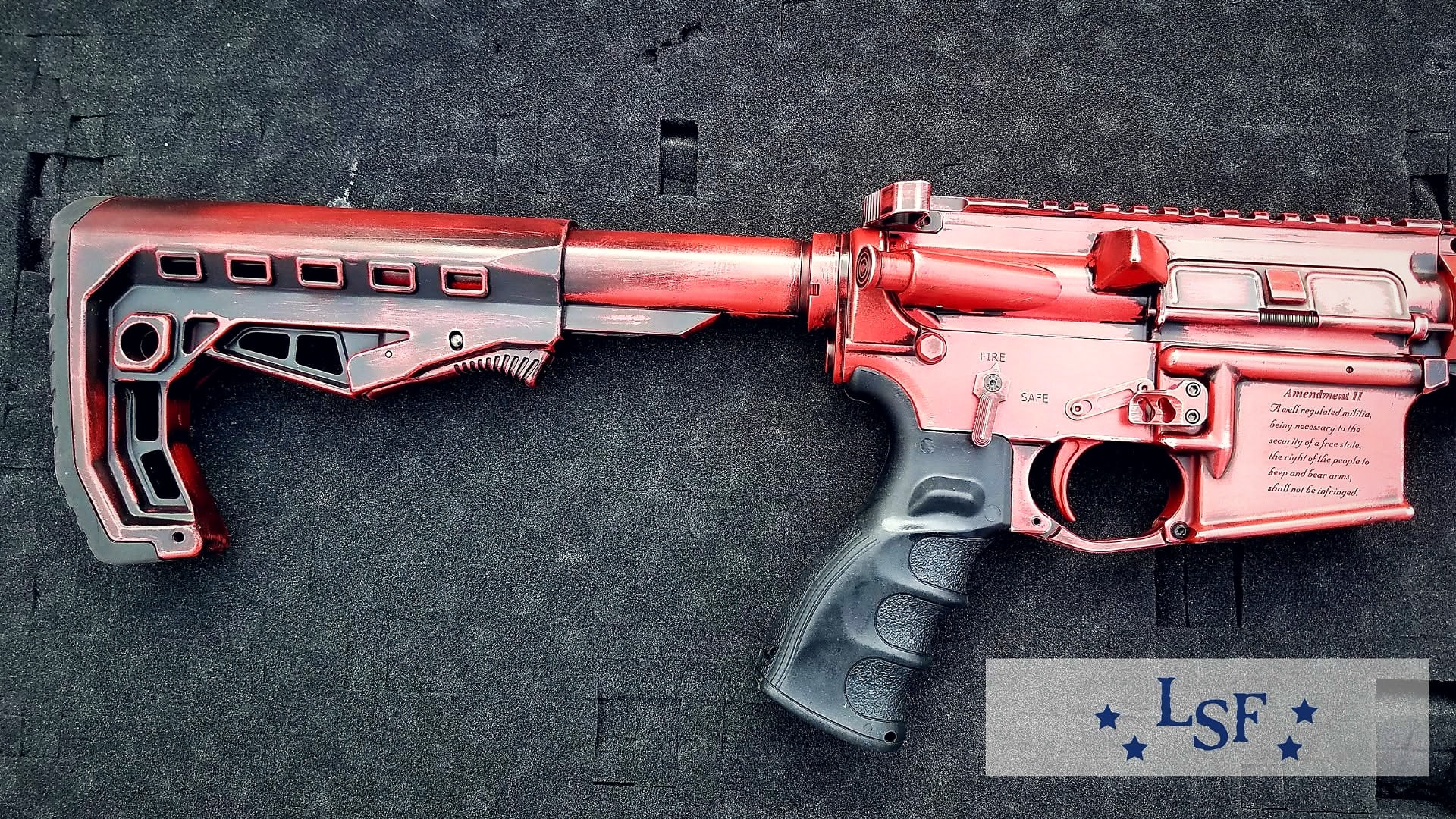
When you design a build with us, one of the first choices is the configuration: rifle, short-barreled rifle (SBR) or pistol. They can look similar, but they're built differently, they handle differently, and they're treated differently under federal law. Here's a plain-English breakdown to help you choose.
Side-by-Side Comparison
| Feature | Rifle | SBR | AR Pistol |
|---|---|---|---|
| Barrel length | 16" or longer | Under 16" | Typically 7.5"–14.5" |
| Stock | Shoulder stock | Shoulder stock | No shoulder stock |
| How it's fired | From the shoulder | From the shoulder | Designed to be fired with one hand |
| Overall size | Full size | Compact | Most compact |
| Federal classification | Standard rifle | Covered by the National Firearms Act (federal registration not currently enforced — see 2026 changes) | Handgun |
| Best for | Hunting, long-range, all-around use | Home defense, vehicles, close quarters | Compact carry and storage, range fun |
| Suppressor-ready | Yes, with a threaded barrel | Yes — a popular pairing | Yes — a popular pairing |
The AR Rifle
Under federal law, a rifle is designed to be fired from the shoulder and must have a barrel at least 16 inches long and an overall length of at least 26 inches. The longer barrel gives more velocity and a longer sight radius, which helps at distance. It's the most versatile configuration and the simplest to own — no extra federal paperwork beyond a normal transfer.
The Short-Barreled Rifle (SBR)
An SBR is a rifle — shoulder stock and all — with a barrel under 16 inches or an overall length under 26 inches. You get rifle-style handling in a much shorter package, which is why SBRs are popular for home defense and tight spaces. SBRs are covered by the National Firearms Act. For decades that meant a $200 tax and ATF approval before you could take one home — but that changed in 2026 (see below). Both SBRs and AR pistols can be suppressed — the short barrel and a suppressor make a compact, quieter setup.
The AR Pistol
An AR pistol uses a short barrel but has no shoulder stock, because a pistol is designed to be fired with one hand. Many owners add a stabilizing brace. AR pistols are the most compact configuration and are regulated as handguns under federal law, not under the NFA. Both SBRs and AR pistols can be suppressed — the short barrel and a suppressor make a compact, quieter setup.
What Changed for SBRs in 2026
January 1, 2026
The One Big Beautiful Bill Act cut the federal NFA making and transfer tax on SBRs — along with suppressors, short-barreled shotguns and "any other weapons" — from $200 to $0. Machine guns and destructive devices kept the tax.
August 5, 2026
A federal court in Texas (Silencer Shop Foundation v. ATF) ruled that, with the tax at $0, the NFA's registration and approval requirements for SBRs, suppressors, short-barreled shotguns and AOWs exceed Congress's authority, and blocked ATF from enforcing them against the parties in the case. The government did not appeal.
October 9, 2026
ATF announced it will no longer require ATF approval or NFA registration before making or transferring SBRs, short-barreled shotguns, suppressors and AOWs — for everyone nationwide, not just the parties in the lawsuit.
What still applies
- This is an ATF enforcement decision, not a repeal. The NFA is still on the books, and ATF has said the policy could change.
- Normal federal rules still apply: buying through a licensed dealer, the Form 4473 and the background check.
- Rules for taking an SBR across state lines may still apply — check before you travel.
- Businesses that manufacture or deal in SBRs still need Special Occupational Tax (SOT) status.
- State laws vary, and some states still restrict or ban SBRs. Check your state's laws before you buy.
James keeps up with these changes and will tell you exactly what applies to your build.
Can I Turn a Pistol into an SBR?
Adding a shoulder stock to a pistol with a barrel under 16 inches makes it an SBR. Under ATF's October 2026 policy, federal approval and registration aren't currently being enforced for SBRs, but state laws vary and the federal policy could change. Check what applies to you — or ask James — before you reconfigure.
Which One Should I Choose?
- Choose a rifle if you want maximum versatility and range, and the simplest ownership.
- Choose an SBR if you want rifle handling in the most compact package and are prepared for the NFA process.
- Choose a pistol if you want the most compact AR and don't need a shoulder stock.
Frequently Asked Questions
What barrel length makes an AR a rifle?
16 inches or longer, with an overall length of at least 26 inches.
Is an SBR legal?
Under federal law, yes. Since October 9, 2026, ATF no longer requires approval or registration to make or transfer an SBR. Some states still restrict or ban them, so check your state's laws before you buy.
Can I shoulder an AR pistol?
A pistol is designed to be fired with one hand. Rules on stabilizing braces have changed several times, so confirm current rules before you buy — and ask James if you're unsure.
Does Last Sentinel build all three?
We build rifles and AR pistols in-house. Interested in an SBR? Call James at (417) 684-7202 to talk about availability for your build.
This guide is general information, not legal advice. Firearm laws change and vary by state — always confirm the current requirements that apply to you.
Ready to design yours?
Ready to Build?
Start Your Custom Build
Every LSF rifle is built to your exact specifications and test-fired before it leaves our facility. Design your rifle in our online builder, or call us to get started.